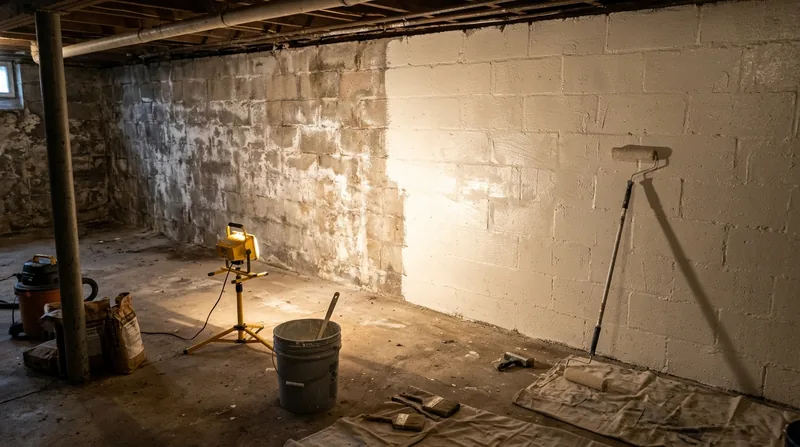




Basement Wall Sealing in Springfield
Springfield sits on the flat floor of ancient glacial Lake Hitchcock, where layered lake-bottom clay and silt hold a high water table close to the surface. That geology is why so many basements in Forest Park, Hungry Hill, and Sixteen Acres stay damp long after the rain stops. Basement Wall Sealing in Springfield addresses the wall surface itself: the efflorescence, the chalky white bloom, and the slow seepage that shows up on brick, brownstone, and poured concrete. We prep the wall, remove the mineral bloom, and apply a penetrating or membrane sealer matched to your foundation type. It solves minor dampness honestly, and we tell you when your problem is actually hydrostatic pressure instead. Start with a free basement inspection so we can name the real failure mode before anyone sells you a sealer.
Why Basement Wall Sealing Matters in Springfield's Glacial Clay and River Valley
Springfield's housing stock tells the story of moisture. The 1870s to 1910s Victorians and Queen Anne homes in McKnight sit on brownstone and brick foundations laid with old lime mortar, which wicks water and sheds it as efflorescence. The 1910s to 1940s triple-deckers on Hungry Hill and Liberty Heights have full basements that take on seepage every spring snowmelt. Out in Sixteen Acres and East Forest Park, the 1950s to 1970s Capes and ranches on block basements show damp seams and musty smells after a nor'easter. Each of these calls for a different sealing approach.
- Lime mortar joints on Victorian foundations need breathable sealing, not a hard shell that traps moisture.
- Block basements in Sixteen Acres wick water through the mortar joints and need joint and surface treatment together.
- Poured concrete in Longmeadow, Wilbraham, and Agawam usually shows dampness at form tie holes and cold joints.
- Homes near the Connecticut River floodplain see higher water tables after tropical storms and need pressure assessment first.
Sealing is the right first step when the wall is damp but not actively weeping under pressure, and we say so plainly when it is not.
Key info: A 1900s Queen Anne in McKnight with white efflorescence and a damp wall is a classic sealing candidate. The same wall weeping at the cove joint after a March thaw is a hydrostatic pressure problem, and a sealer alone will fail there. We check which one you have before quoting.
For official guidance on residential construction and alteration permits in Springfield, check the city's Springfield city government pages before any structural work begins.
How We Seal Basement Walls in Springfield, Step by Step
Every job starts with a moisture read on the wall, not a sales pitch. We look at where the water shows, whether it is efflorescence, damp patches, or active weeping, and we test the mortar and substrate. Then we prep and seal in a sequence that matches the foundation. On a 1920s foursquare in Forest Park, that means wire-brushing old lime mortar joints and choosing a breathable sealer, not a plastic sheet coat. On a 1990s Colonial in Longmeadow, it means cleaning form tie holes and sealing the poured wall surface.
- We inspect the wall, the cove joint, and the floor seam to identify the water source.
- We remove efflorescence with a dry brush and a mild acid wash where the substrate allows.
- We repair mortar joints and small cracks before any sealer goes on.
- We apply a penetrating sealer on brick and block, or a membrane sealer on poured concrete.
- We check grading and downspout extensions at the same visit so surface water moves away from the wall.
If the wall is bowing or the pressure is real, we refer you to bowing wall repair rather than seal over a structural problem.
Key info: On a 1955 ranch in East Forest Park, the wall was damp but not weeping. We removed efflorescence, sealed the block joints and surface, and extended two downspouts. That solved the musty smell without a drain system. A 1915 triple-decker in Hungry Hill with water at the floor seam after every rain got a different answer: an interior drain tile recommendation, because sealing alone would have masked the pressure.
For the full interior drainage picture, see our interior drain tile system page.
Sealing Methods We Use on Springfield Foundations
Not every wall takes the same product. Brick and brownstone foundations with lime mortar need to breathe, while poured concrete can take a film-forming membrane. The table below shows how we match method to substrate.
| Approach | Description | Best for |
|---|---|---|
| Penetrating sealer | Sinks into the substrate and blocks capillary wicking without trapping vapor. | Brick and block walls with efflorescence and damp patches. |
| Membrane sealer | Forms a flexible film on the wall face against minor seepage. | Poured concrete in Longmeadow, Wilbraham, and Agawam. |
| Breathable lime-compatible coating | Lets old mortar dry out while slowing surface dampness. | Victorian and rowhouse foundations in McKnight and Mattoon Street. |
| Joint and crack prep plus seal | Repairs mortar joints and small cracks before sealing the wall. | Block basements in Sixteen Acres and East Forest Park. |
We pick the method after the inspection, not before, because the wrong sealer on an old lime mortar wall does more harm than good.
Basement Wall Sealing Cost in Springfield: What to Expect
Most basement wall sealing jobs in Springfield start from $1,500 and move up with wall length, substrate condition, and how much prep the mortar needs. A single damp wall on a 1950s ranch is at the low end. A full basement perimeter on a 1900s Victorian with failing lime mortar and heavy efflorescence sits higher because the prep takes longer. We quote after the inspection so the number reflects your wall, not a phone guess.
- Wall length and height drive the material and labor volume more than anything else.
- Foundation type matters: brick and brownstone prep costs more than poured concrete.
- Efflorescence severity and mortar repair add prep time before sealing can start.
- Access to the wall, especially in tight Mattoon Street rowhouse basements, affects labor.
- Grading and downspout corrections are quoted separately when they are needed.
Get two or three estimates and compare what each one includes, because a low bid that skips prep is not the same job. Our pricing overview lays out the ranges in more detail.
Basement Wall Sealing Near Me: How to Choose a Contractor Near Springfield
Hiring for basement wall sealing near me should not be a leap of faith. Ask for the license and insurance certificate, and confirm the coverage is current for residential work. Get more than one estimate and compare scope line by line, not just the total. Ask for references from Springfield jobs on similar foundations, and call them. If your home is in a historic district or under HOA rules, confirm what the association allows before work starts.
- Verify the contractor is licensed and insured, and ask for the certificate directly.
- Request two or three written estimates with the same scope so you can compare fairly.
- Ask for local references on brick, block, or poured walls like yours.
- Confirm who pulls any permit the local building department requires, and verify the rules with the city.
- Check HOA or historic district requirements before scheduling the work.
We are a Basement Health Association member and we put the scope in writing before we start. Reach us through the contact page to set up an inspection.
Basement Wall Sealing in Springfield: Pricing Guide
| Service | Price | Details |
|---|---|---|
| Single wall sealing | Starting at $1,500 | One damp wall prepped and sealed, with efflorescence removal and joint repair included |
| Full basement perimeter sealing | Starting at $3,200 | All four walls sealed; price rises with wall length, height, and mortar condition |
| Brick or brownstone foundation sealing | Starting at $2,600 | Breathable sealer on old lime mortar; prep time drives the final number |
| Complex or large-scale job | On estimate | Heavy efflorescence, structural concerns, or tight access need an on-site look first |
| Travel | Included | In Springfield and surrounding areas, no separate call-out or mileage fee |
| Estimate | Free | Response within 24h at (413) 288-3958, no obligation to book |
Indicative pricing, the exact cost depends on square footage, finish, and site access. Free personalized estimate within 24h at (413) 288-3958.


