



Basement Mold Remediation in Springfield: Fix the Moisture, Then the Mold
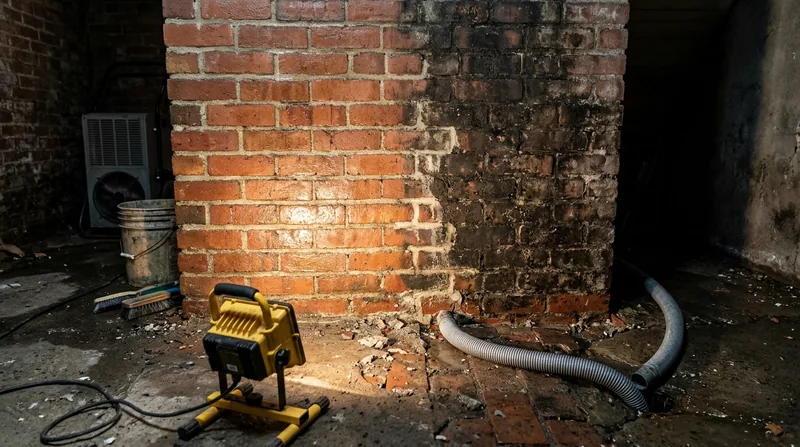
Springfield sits on the flat floor of ancient glacial Lake Hitchcock, and that layered lake-bottom clay and silt holds water like a sponge. When your basement smells musty or you spot dark staining on the joists and drywall, the mold is a symptom. The cause is moisture moving through brick and brownstone foundations with old lime mortar, or through the poured walls of a 1990s Colonial in Longmeadow. Basement Mold Remediation in Springfield starts with finding that moisture path, not just spraying the visible growth. We contain the affected area, treat the materials, and then correct the drainage or humidity problem so the mold does not come back next spring. Call (413) 288-3958 to schedule a free basement inspection. If you already know water is entering, start with our basement waterproofing service page to see how we stop it at the source.
Why Mold Grows So Fast in Springfield Basements
The Connecticut River valley keeps a high water table, and our freeze-thaw cycles push hydrostatic pressure against foundations all winter. In the McKnight district and along Mattoon Street, 1870s Victorian and brick rowhouse basements wick groundwater through porous mortar and efflorescence shows up on the walls. In Sixteen Acres and East Forest Park, 1950s ranches on block basements collect damp air that never dries out. Add humid Pioneer Valley summers and the mold has everything it needs.
- Hydrostatic pressure forces water through foundation cracks and mortar joints after heavy rain and snowmelt.
- Failed drain tile or a dead sump pump leaves the perimeter saturated and the basement air at 70 percent humidity or higher.
- Poor grading and short downspouts dump roof water against the foundation instead of carrying it away.
- Cold brick and block walls condense summer humidity, keeping framing and stored materials damp.
Treating the mold without correcting those conditions is a temporary fix, and it usually fails within one season.
Key info: A Forest Park foursquare we inspected had mold on the rim joists and a musty smell all summer. The cause was a failed footing drain on the uphill side, not a leak in the wall itself. We remediated the joists and corrected the drainage, and the smell did not return.
Massachusetts homeowners can verify contractor registration through the Office of Consumer Affairs and Business Regulation before hiring anyone for this work.
How We Remediate Mold and Stop It From Coming Back
We treat mold as a moisture problem first. The inspection starts with a musty smell diagnostic, a moisture meter reading on the walls and framing, and a look at the drain tile, sump basin, and grading. Only then do we set up containment and begin remediation. That order matters in Springfield, because a treated wall that keeps getting wet will grow mold again within weeks.
- We inspect the basement, measure moisture in walls and framing, and trace the water source.
- We build containment with plastic sheeting and negative air pressure to keep spores out of the living space.
- We remove porous materials that cannot be cleaned, such as wet drywall and insulation.
- We treat affected surfaces with an antimicrobial and HEPA-vacuum the area.
- We correct the moisture path with drainage, sealing, or dehumidification, depending on what the inspection found.
- We verify dryness with a final moisture reading before we remove containment.
The moisture correction is the part that actually prevents mold growth from returning, and it is where most of the work lives.
Key info: A 1910s triple-decker in Hungry Hill had mold on the stairwell framing from a sump pump that had failed during a spring nor'easter. We remediated the framing, installed a new sump pump with a battery backup, and added a vapor barrier over the damp floor. The basement has stayed dry since.
When the inspection shows water coming through the wall rather than from humidity, we move to foundation crack repair before any mold treatment begins.
Remediation and Moisture Control Methods We Use
Not every damp Springfield basement needs the same approach. A single crack that weeps after rain is a different job from a wall that stays wet all summer because the water table is high. The table below shows the methods we use and when each one fits.
| Approach | Description | Best for |
|---|---|---|
| Containment and surface treatment | Plastic containment, HEPA vacuuming, and antimicrobial treatment of affected framing and walls. | Visible mold on joists, rim boards, and wall surfaces with a known moisture source. |
| Drainage correction | Interior perimeter drain, drain tile repair, or grading and downspout changes to move water away. | Wet walls after rain, high water table, and failed footing drains in older Springfield homes. |
| Sump pump and backup | New sump pump, check valve, discharge line, and battery backup to keep the basin dry during storms. | Basements that flood when the power goes out or the pump fails during a nor'easter. |
| Vapor barrier and dehumidification | Vapor barrier over the floor and sealed wall membrane, plus controlled dehumidification for humid summers. | Damp, musty basements with no standing water, common in 1950s ranches and block foundations. |
| Wall sealing and crack injection | Epoxy or polyurethane injection for active cracks, plus parging and wall sealing on brick and block. | Localized seepage through cracks and mortar joints in Victorian and triple-decker foundations. |
We pick the method from the inspection findings, not from a sales script, and we tell you plainly when simple crack sealing is enough.
Basement Mold Remediation Cost in Springfield: What to Expect
Most residential mold remediation jobs in Springfield start at $1,500, and that figure covers a contained area with surface treatment and a moisture-source correction. A single room with light growth on framing sits near that starting point. Larger jobs move up from there, and the biggest cost driver is always the moisture fix behind the mold, not the square footage of affected material.
- The size of the affected area and how much porous material we have to remove.
- Whether the moisture source is a simple crack or a failed drain tile system that needs replacement.
- Access to the basement and how much containment and HEPA filtration the job requires.
- Whether a sump pump, vapor barrier, or drainage correction is needed to prevent mold growth from returning.
Get two or three written estimates, and make sure each one explains the moisture correction, not just the mold treatment. Our full pricing overview breaks down the ranges for each part of the work.
Hiring a Basement Mold Remediation Contractor Near Me in Springfield
Mold remediation and waterproofing are separate trades from general foundation repair and plumbing, and you want a contractor who does both the treatment and the moisture correction. Ask for proof of registration and insurance, and get a certificate of insurance before work starts. Check references from Springfield jobs, especially older brick and brownstone basements where the moisture path is harder to trace.
Permits are commonly required for structural foundation repair and for work that alters drainage or the sanitary connection of a sump discharge, and thresholds vary by jurisdiction. Verify the rules with the Springfield building department before any work begins. Get at least two estimates, and be wary of anyone who quotes mold treatment without addressing the water source. You can reach us through our contact page to set up a free inspection.
Basement Mold Remediation Near Me: What Springfield Homeowners Should Know
Springfield's moisture problems are seasonal but the mold is not. Snowmelt and spring rain drive water against foundations in March and April, and the humid summer keeps basements damp through August. In the older neighborhoods, the musty smell often shows up in June, weeks after the wet spring, when the damage is already done. If you notice it, call (413) 288-3958 and we will trace the moisture before treating anything.
We serve Springfield and the surrounding Pioneer Valley towns, and we are a member of the Basement Health Association. If you want to understand the full waterproofing picture before remediation, read our interior drain tile system page, which explains the drainage work that keeps basements dry in this valley.
Basement Mold Remediation in Springfield: Pricing Guide
| Service | Price | Details |
|---|---|---|
| Containment and surface treatment | Starting at $1,500 | Covers one contained area with HEPA vacuuming and antimicrobial treatment; affected square footage and material removal move the price. |
| Remediation with moisture correction | Starting at $2,800 | Includes treatment plus crack injection or wall sealing; active water intrusion and the drainage fix required drive the cost. |
| Full basement remediation and drainage | On estimate | Needed when the inspection finds failed drain tile or a high water table; requires an on-site look before a number is given. |
| Travel | Included | In Springfield and surrounding areas, no separate call-out or mileage fee. |
| Estimate | Free | Response within 24h at (413) 288-3958, no obligation to book. |
Indicative pricing, the exact cost depends on square footage, finish, and site access. Free personalized estimate within 24h at (413) 288-3958.


